 Türkçe
 English
 Nederlands
 Español
 Deutsch
Orphans and Orphan Education in Uganda
🌹 In our projects and work with orphans in Uganda, if we can ease the sorrow in a single orphan's eyes we count ourselves fortunate...
3 min read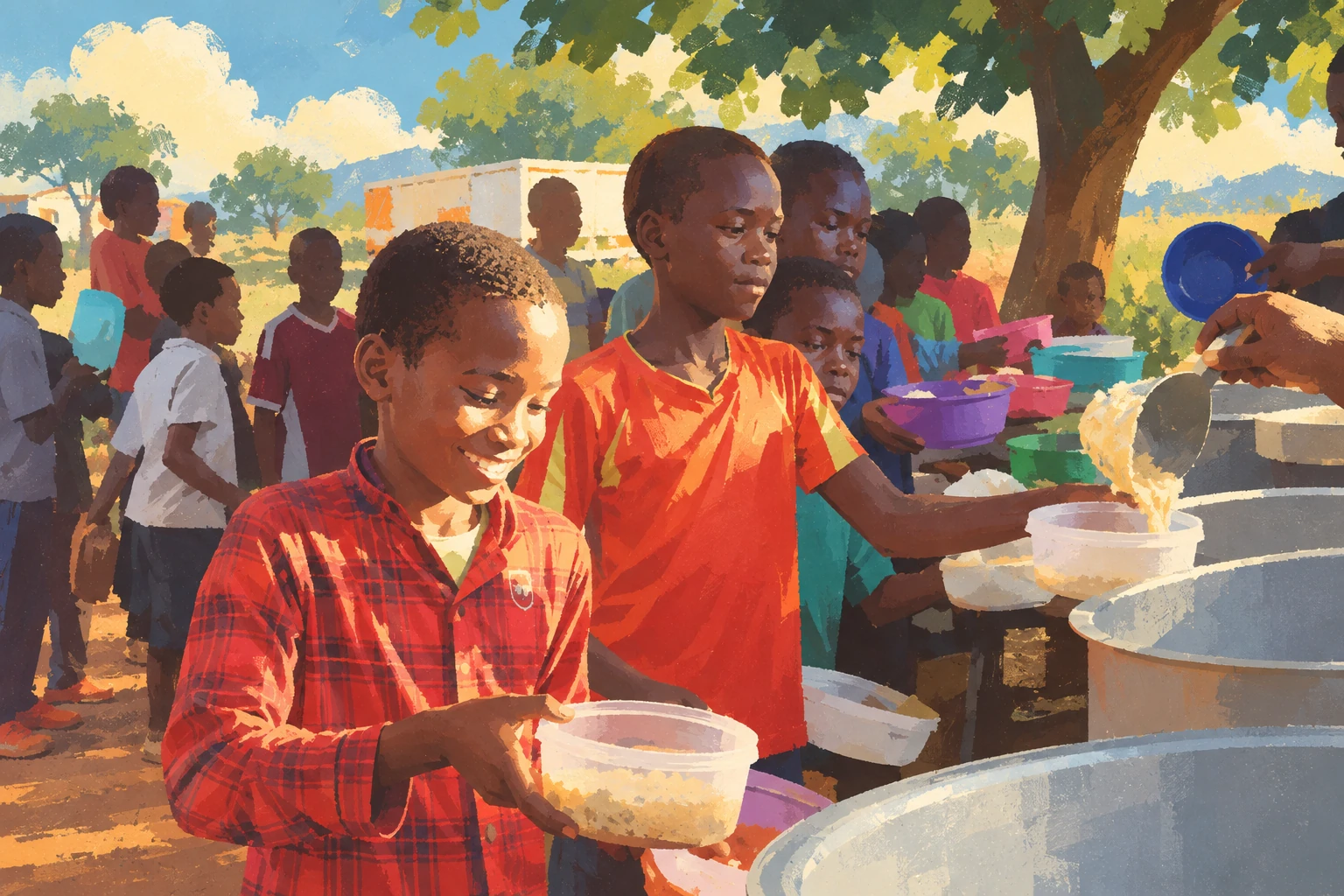
🌹 In our projects and work with orphans in Uganda, if we can ease the sorrow in a single orphan’s eyes we count ourselves fortunate…
Uganda is an East African country with a population of 44 million. Of that population,
- 48 per cent are aged 0 to 14
- 49 per cent are aged 15 to 64, and
- 3 per cent are over 65.
On top of that, 75 per cent of the population lives in rural areas and 25 per cent in towns and cities.
Population growth is very rapid. The national population bureau estimates that Uganda’s total population will reach 47 million by 2025 and 63 million by 2030.
Uganda’s education system runs from pre-primary at ages 3 to 5, through seven years of primary, then four years of secondary at Ordinary Level and a further two years at A Level.
According to 2018 figures from the Uganda Bureau of Statistics, 21 per cent of Ugandans live below the poverty line. For families in that group, paying school fees for their children is simply impossible, and the country’s orphaned children fall within the same group.
▪︎▪︎▪︎▪︎
Figures from the UNESCO Institute for Statistics show a sharp drop in the number of pupils still in school as you move from primary to secondary and on to higher education.
In Uganda, only one in every four children who start primary school goes on to secondary school.
Uganda has the youngest population in the world: 60 per cent of its people are under the age of majority, and 15 per cent are orphans.
Uganda’s situation shows clearly how disparities in income shape the number of orphans in a country.
Orphanages are places where orphaned and vulnerable children live and have their basic needs met.
As noted above, roughly 15 per cent of Uganda’s population is made up of orphaned children, and that is exactly why helping them meet the basic needs of daily life matters so much.
▪︎▪︎▪︎▪︎
As the Nile Humanitarian Development Agency, we deliver support to orphaned children in schools across three separate cities.
▪︎▪︎▪︎▪︎
The orphanage in the Kajansi area of Kampala sits inside a school that is also a mosque and an Islamic school. Since 2009, for thirteen years now, our donors have helped cover basic dry food needs there: sugar, flour, salt, oil, beans, chickpeas, rice and the like. The school is a boarding school and houses around 50 orphans.
Our Nile humanitarian organisation employs Ugandan teachers in the orphanages to provide schooling and guidance.
A Ugandan colleague of ours, an educator, works at the second orphanage, in Mukono, a school with 65 orphans. Food and in kind support reaches that school too.
Similar support goes to the third orphanage, in the city of Jinja, where 115 orphaned children live.
As the Nile Humanitarian Development Agency, we take a whole child approach to the education of orphans, trying to help the most capable pupils along, and working towards something sustainable for the development of 230 orphaned children in Uganda and for their hold on life.
In short: we fall a long way short. Part of us is always an orphan, and our hearts are never quite whole…
💐
We pray for our donors and we wait on God for His help and His favour. 🤲🏽
▪︎▪︎▪︎▪︎
(Akif Çevik, Consultant, Nile Humanitarian Development Agency)
Reader notes
No one has left a note on this post yet. Be the first.
Related posts
 Education & Dialogue
 Education & Dialogue