 Türkçe
 English
 Nederlands
 Español
 Deutsch
Knowing the City We Live In: Urban Culture and Urban Awareness
Cities are not only places where people live side by side; they are the centres where ideas, cultures and civilisations take shape and travel on to other parts of the world. We spoke with the historian, social scientist and author Eyüp Ensar Uğur about what it means to know the city we live in...
8 min read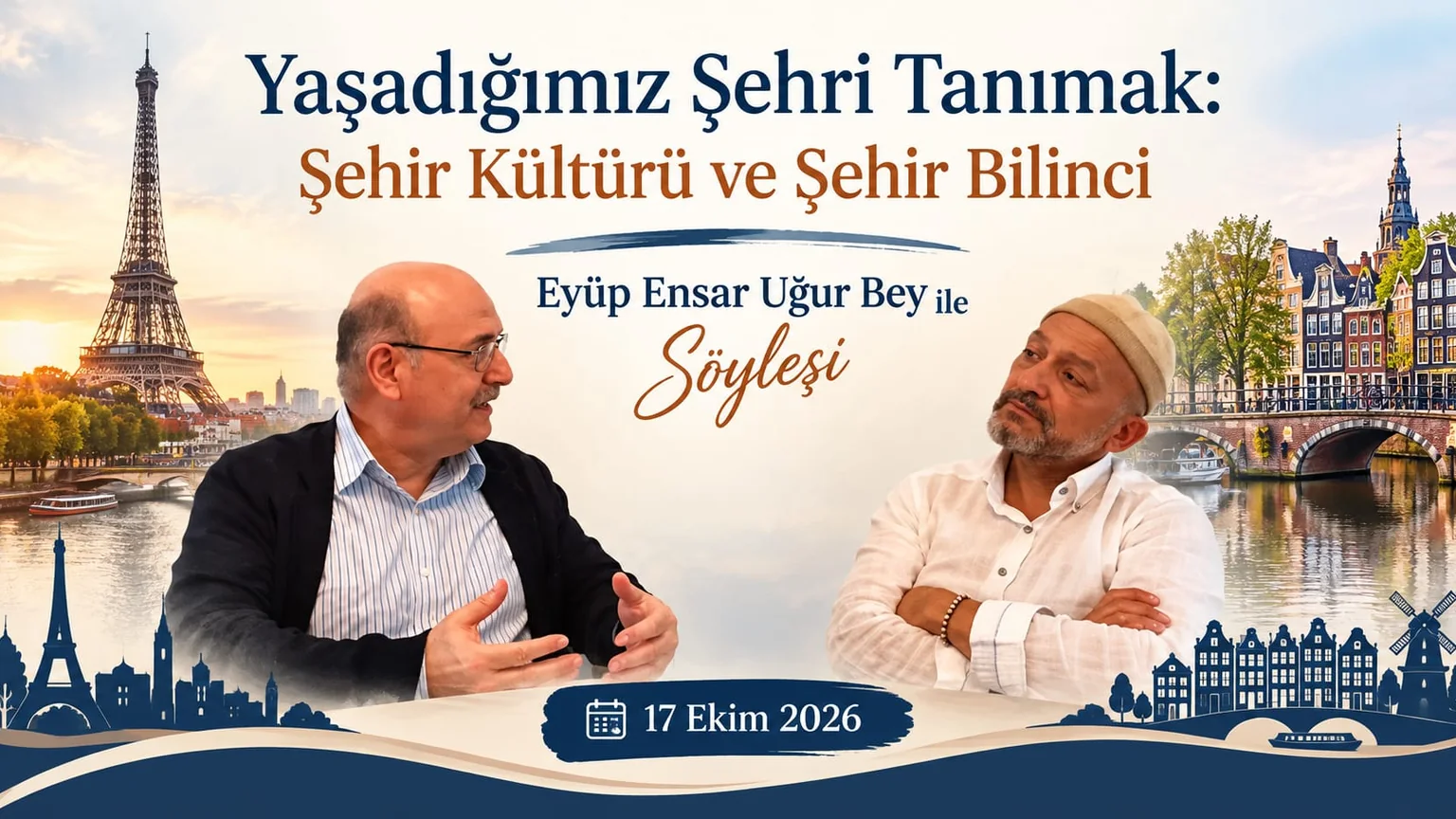
A conversation with the historian, social scientist and author Eyüp Ensar Uğur
Let me begin by introducing Eyüp Ensar Bey to our readers.
He is a historian, social scientist and author who grew up in the historical and cultural atmosphere of the Bosphorus, in a setting shaped by a long-standing urban tradition and by circles of art and literature. The distinctive way of life along the Bosphorus and the many layers of Istanbul’s historical heritage played an important part in forming his thinking and his intellectual background.
After graduating from the Department of Electrical Engineering at Yıldız Technical University, he turned his academic interest towards history and studied in the Department of History at Istanbul University. Alongside his academic work, he taught courses on the history of the Middle East as a lecturer at a university.
Working on Islamic political and intellectual history, on civilisations, sociology, philosophy and the relationship between East and West, he aims to build a bridge between historical memory and the societies of our own day.
Eyüp Ensar Uğur, who has lived in France for about ten years, brings together his experience of life in the Middle East and in Europe with his historical and cultural background, and approaches civilisations from a comparative perspective. In the past he took part in various television programmes and digital media channels with his commentary; today he continues to share his views on history, thought, society and civilisation through his articles, his cultural writing and his social media.
I thank him for giving his time to this conversation and for sharing his experience, and I wish him health and well-being. Enjoy the read.
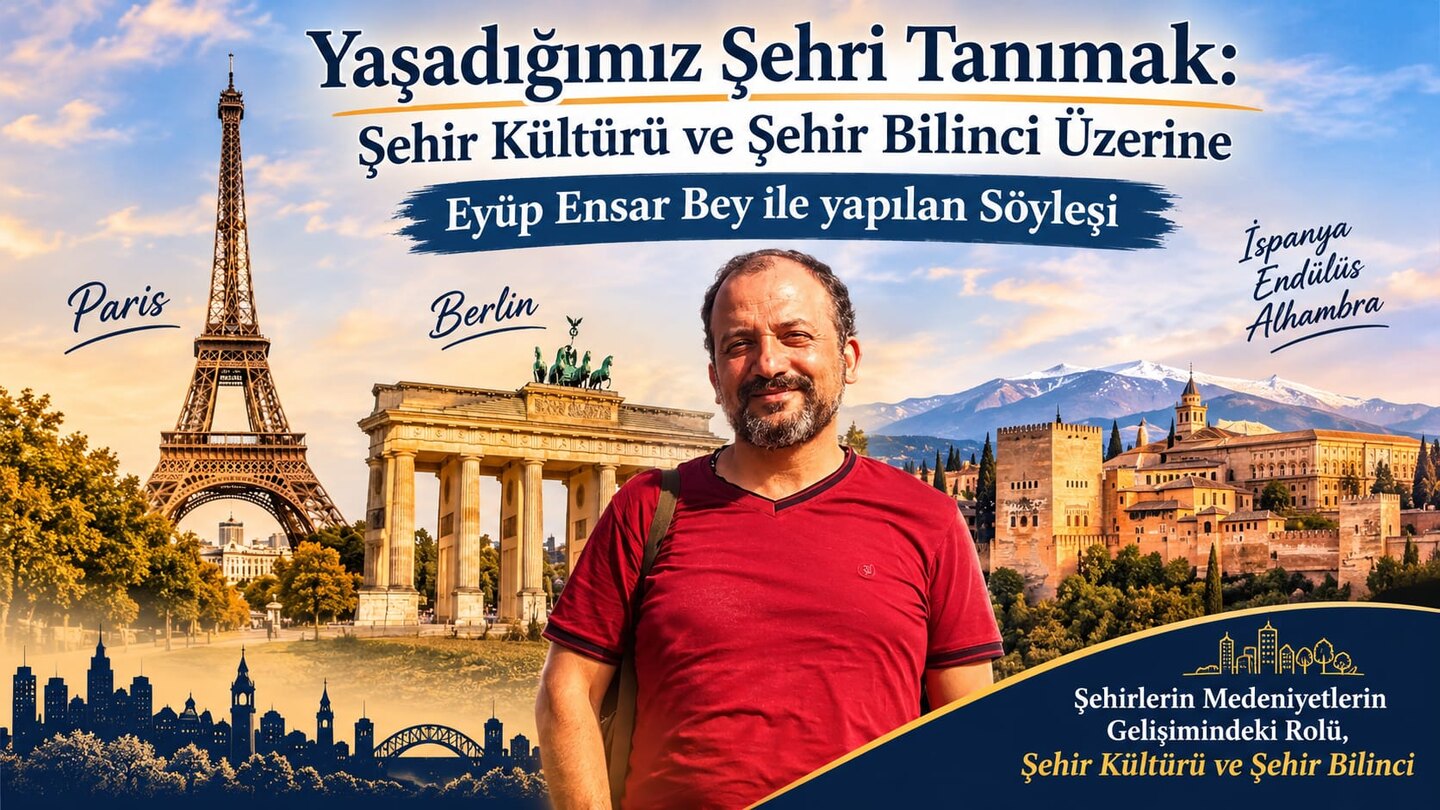
On a weekend in the Netherlands, in the particular atmosphere of autumn, Eyüp Ensar Uğur opened our conversation on knowing the city we live in and on urban awareness, speaking about why it matters to know our city, about urban culture, urban awareness and the part large cities have played in the development of civilisations.
The conversation dwelt on the idea that cities are not merely places where people live side by side, but centres where ideas, cultures and civilisations develop and then travel on to other parts of the world. It also took up the importance of coming to know the cities we have migrated to, of drawing on their historical and cultural store, of making use of the opportunities they offer, and of a person discovering their own potential.
Cities: the Heart of Civilisations and a Meeting Point for Ideas
Eyüp Ensar Uğur noted that cities have carried an important role in the development of civilisations and in carrying ideas to large numbers of people, and he likened that role to the place of the heart and the mind in the human body.
He drew attention to what cities have made possible, throughout history, in carrying universal messages to other parts of the world. He said that in the spread of the message the Prophet set out in Mecca, it mattered that the city was a centre bringing together people from different parts of the Arab world. He described how those who came together through the fairs and the trade routes carried the message they had heard back to their own regions.
In the same way, he said, the message that arose in Jerusalem and the historical lands around it in the time of Jesus also spread through the important centres of the age; and the great centres of civilisation in the time of Moses played their part in shaping historical events and ideas.
While cities each have their own distinct functions, he stressed that political, economic, cultural and intellectual movements have most often taken shape in these centres. He emphasised that, according to their position and their circumstances, cities have gained importance on both a local and a global scale throughout history.
Recalling a conversation with a friend some twenty five years ago, he touched on why a line of thought or a movement needs to be situated in a place with strong connections to the rest of the world if it is to develop internationally. He said that America is an important centre in terms of the means it offers for connecting with the world, and that Istanbul serves a similar function for Türkiye.
He recounted how the late Turgut Özal urged and encouraged people in business in Türkiye to open up to wider markets, and in this way offered his assessment of why reaching wider markets matters. He described the opportunities that reaching international markets through Istanbul, rather than remaining only in Kayseri or Adana, has offered for the growth of business.
Paris: a City of Thought, Art and Enlightenment
Our conversation then turned to Paris, one of the important centres of thought of the modern age. He said that Paris, which played an important part in the development of Enlightenment thinking, was a meeting point for scientists, writers, artists and thinkers from many countries.
Speaking of thinkers from different periods whose lives crossed with Paris, among them Descartes, Pascal, Karl Marx, Lenin and Trotsky, he noted that the city offered a setting in which various ideologies and currents of thought could be debated. The ideas that developed there, he said, reached distant parts of the world through books and articles.
He expressed that those who went to Paris did not only encounter new ideas; they also learned how to express their thinking, how to write, how to argue a case and how to bring it to the public.
Touching on the importance of Paris for Turkish literature and intellectual life as well, Uğur gave such names as Yahya Kemal Beyatlı, Ali Fuat Başgil, Nurettin Topçu and Şinasi as examples. Through these figures he considered how the knowledge and the methods acquired in Europe were carried into Turkish intellectual life.
Le Select Café: Knowing a City’s Memory
When I mentioned Le Select Café, which I had visited in Paris, we had the chance to share a recollection connected with the place.
After I posted on social media that this café, with a history of about a hundred and fifty years, had been one of the meeting places of the working class and of circles on the left, a representative of a civil society organisation living in France called me. He told me that about ten years earlier they had wanted to interview the sociologist Nilüfer Göle, and that Göle had suggested Le Select Café in particular as the place to meet. At first they had taken this to be an ordinary café meeting, and only later realised that the choice was bound up with the historical and intellectual past of the place. For this was a historic café that a great many thinkers and artists had frequented in different periods.
Starting from that recollection, we talked about why it matters to know the history, the culture and the intellectual store of the cities we live in. Eyüp Ensar Bey said it was important for people living in Paris to know the city’s history of ideas and its ideological heritage.
He said that learning where people come together in the city one lives in, what its cultural values are, which circles one is in contact with and which institutions and institutes one makes use of, creates an important opportunity for those living in that city. He also counted the cafés in Cairo that Mehmet Akif Ersoy frequented, which are named among the historic places around the Khan el-Khalili bazaar, as examples of coming to know the cultural memory of a city.
The Spirit of Cities and People’s World of Thought
Another subject we took up in the conversation was the effect of cities on a person’s world of thought and personal development.
Eyüp Ensar Bey said that every city has a spirit and an atmosphere of its own, and gave Manchester as an example. In this city, which played an important part in the Industrial Revolution and in the development of capitalism, trade, capital and industry were concentrated; and the understanding of production and trade that emerged there, he explained, spread to other regions.
Speaking of cities where thought and philosophy came to the fore, he gave Athens in ancient Greece, Kufa and Basra in Islamic history, and such important centres of civilisation as Mesopotamia and Egypt as examples.
He expressed that the intellectual development of people who grow up in cities where ideas are debated, knowledge is produced and different views meet is also nourished by that atmosphere. For this reason he drew attention to the fact that the place where a person is born and the place where they are able to realise their potential may not always be the same.
Migration, the Geography of Opportunity and Human Potential
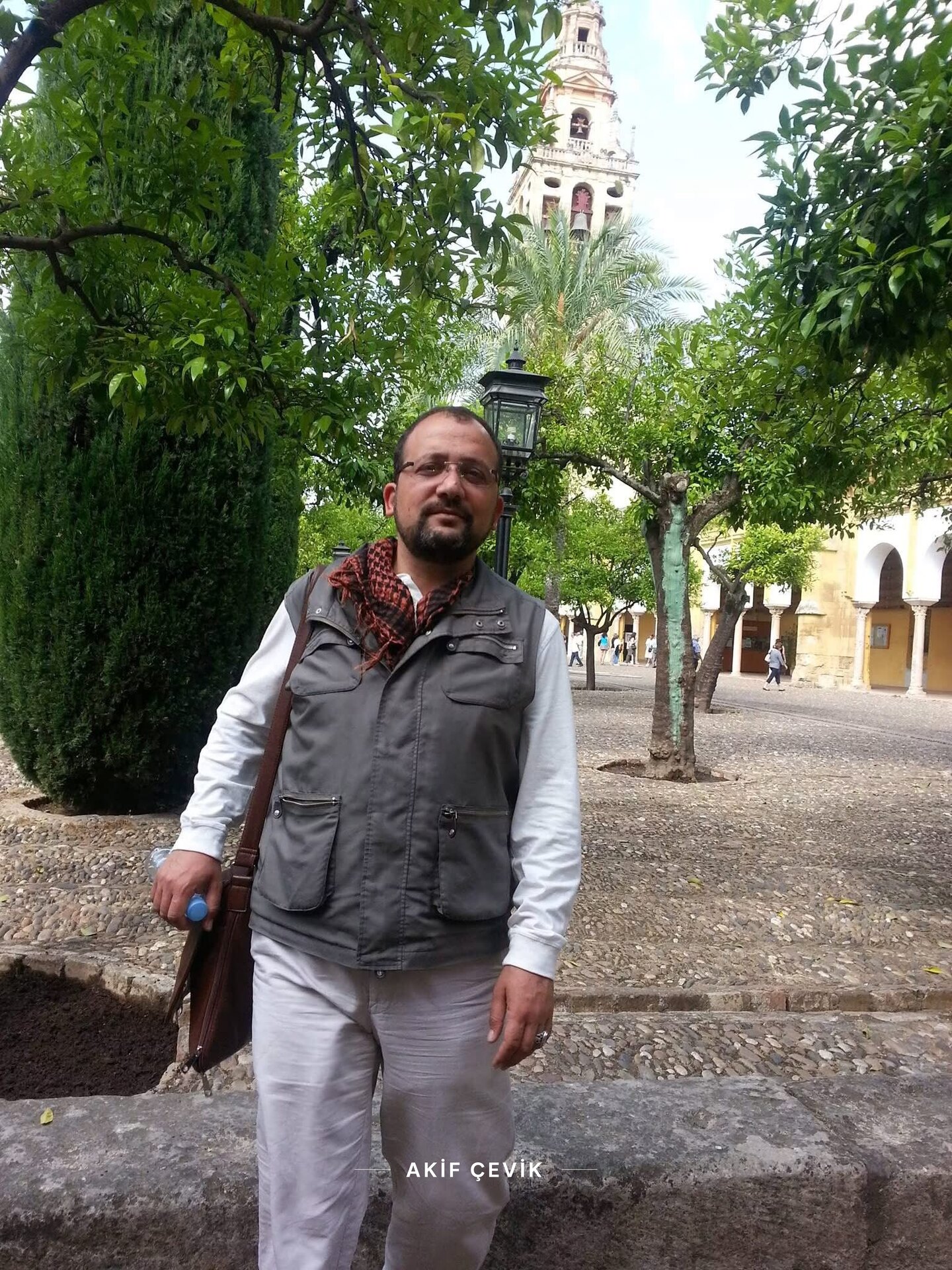
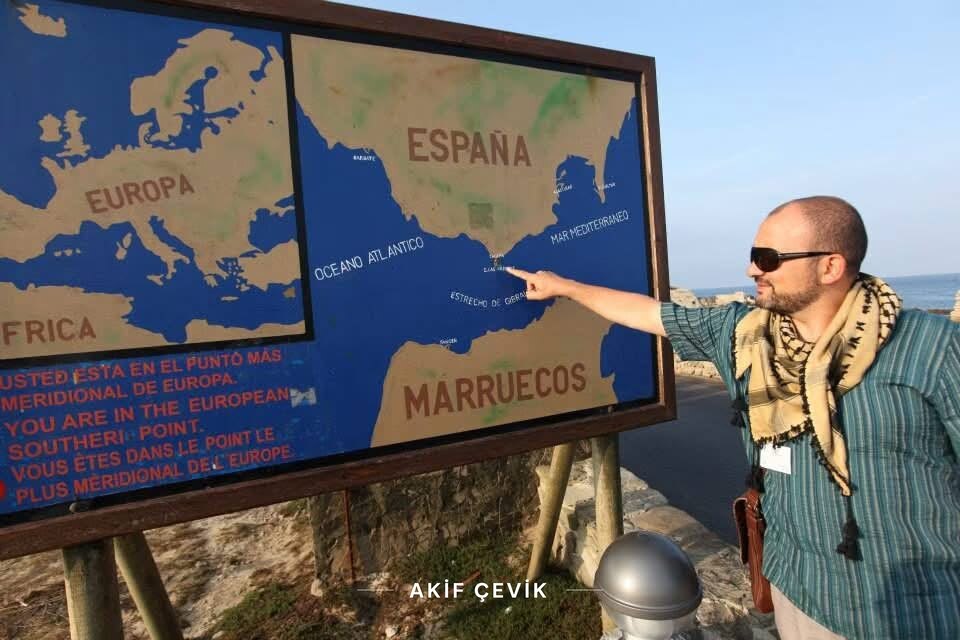
In this part of our conversation we considered migration in terms of a person’s development and of bringing out the potential they hold. He expressed that this development may come about not only in economic and cultural terms but in a spiritual sense as well.
Speaking of the lives of certain spiritual figures who grew up in the far corners or the mountainous regions of Anatolia, he gave such names as Halid-i Bağdadi and Bediüzzaman Said Nursi as examples. He described how these figures received their first education in the places where they lived, and later turned towards centres where wider means were available.
Saying that a person sometimes has to go beyond the bounds of their own surroundings if their abilities are to develop, Uğur stressed that migration is not merely a matter of going from one place to another. It also carries an important meaning, he said, in terms of encountering new possibilities, developing oneself and being able to bring out one’s own potential.
He said that a person who goes to a new place meets different cultures and different people and takes on new responsibilities, and that in this process their knowledge and their experience grow.
Noting that there are a great many examples of this in the lives of people who have had to migrate, he recalled that some who left their countries went on to notable achievements in their new ones. Some, he said, were able to open new paths for themselves in trade, others in art, in science or in work for society.
Finally he expressed that cities do not offer economic means alone; with their social, cultural and artistic opportunities they also contribute to people’s development. He emphasised that these centres have broad networks of relationships that allow people to develop their abilities, to meet different people and to reach other parts of the world.
By way of a closing word: in this conversation, in which he shared his historical, cultural and social background woven together with his own experience, we considered what it means to know the city we live in and to make use of what it offers.
Rather than seeing the cities we have migrated to merely as the places where we live, coming to know their history, their culture, their world of thought and their social fabric, and making use of the economic, social, cultural and artistic opportunities they offer, will help us recognise what migration has brought with it.
We hope that this conversation, held on a fine autumn weekend in the Netherlands, will be of use to readers who wish to know the city they live in more closely, to understand it and to benefit from what it offers.
Reader notes
No one has left a note on this post yet. Be the first.
Related posts
 Life
A Bicycle That Became Hope, Through Ubuntu and the Ideal of Keeping Others Alive
2 September 20254 min readRead the post Life