 Türkçe
 English
 Nederlands
 Español
 Deutsch
World Food Day, the Ubuntu Idea and an Example of Solidarity in Uganda
Drought and famine also affect a person's hope of living, their sense of trust and their expectations of the future. The hardship a family goes through when it cannot reach food is not simply a basic need left unmet...
10 min read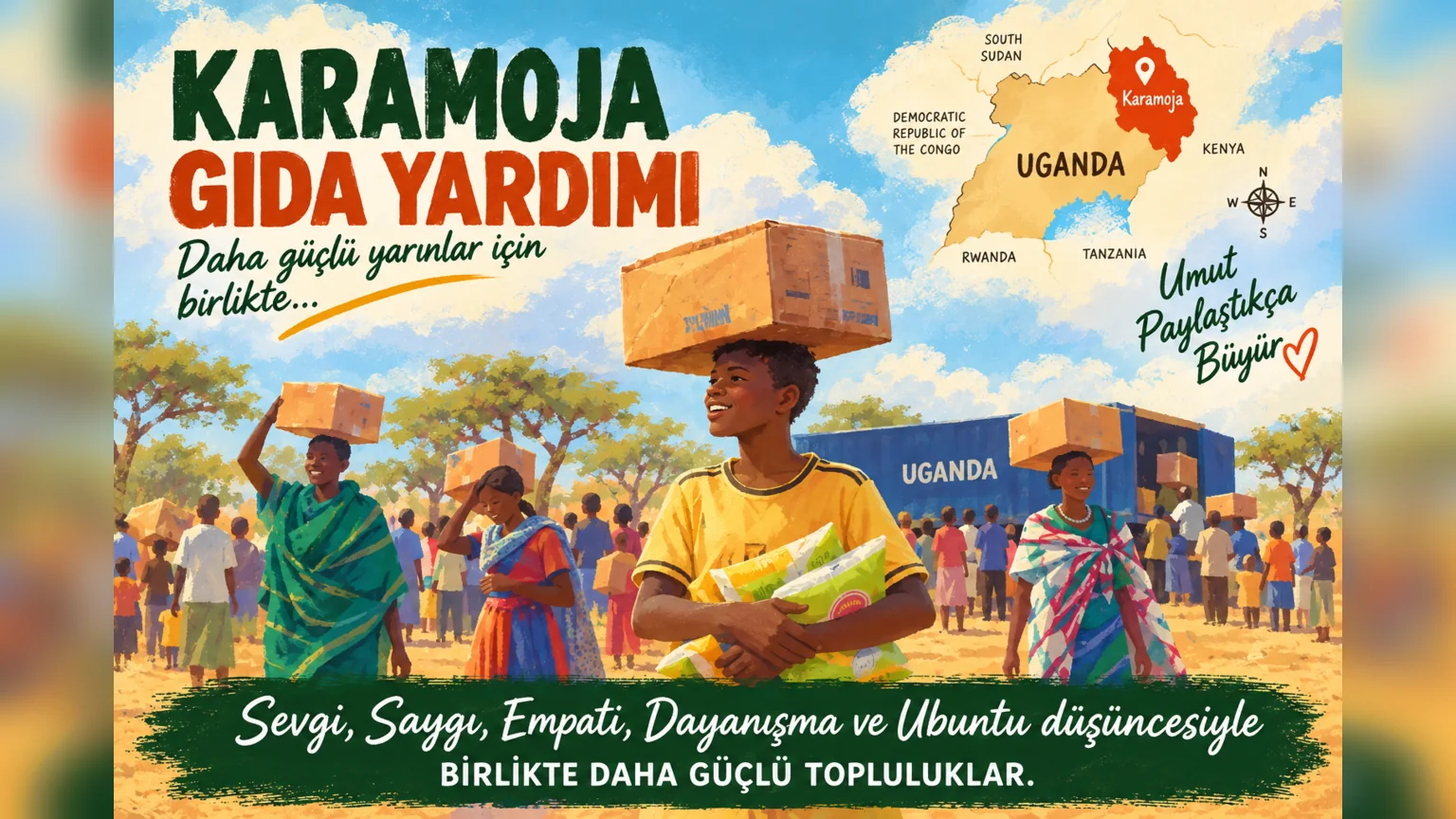
Drought and famine also affect a person’s hope of living, their sense of trust and their expectations of the future. The hardship a family goes through when it cannot reach food is not simply a basic need left unmet; it is a human question that touches human dignity, the development of children and a family’s struggle to keep going. At such times, seeing another person’s need, sharing their pain and taking on responsibility as far as one’s means allow is what our shared humanity asks of us.
I would like to share the food aid carried out in Uganda’s Karamoja region as a concrete example of this, and with it this work of shared conscience undertaken in the spirit of Ubuntu, on the meaning of 16 October, “World Food Day”.
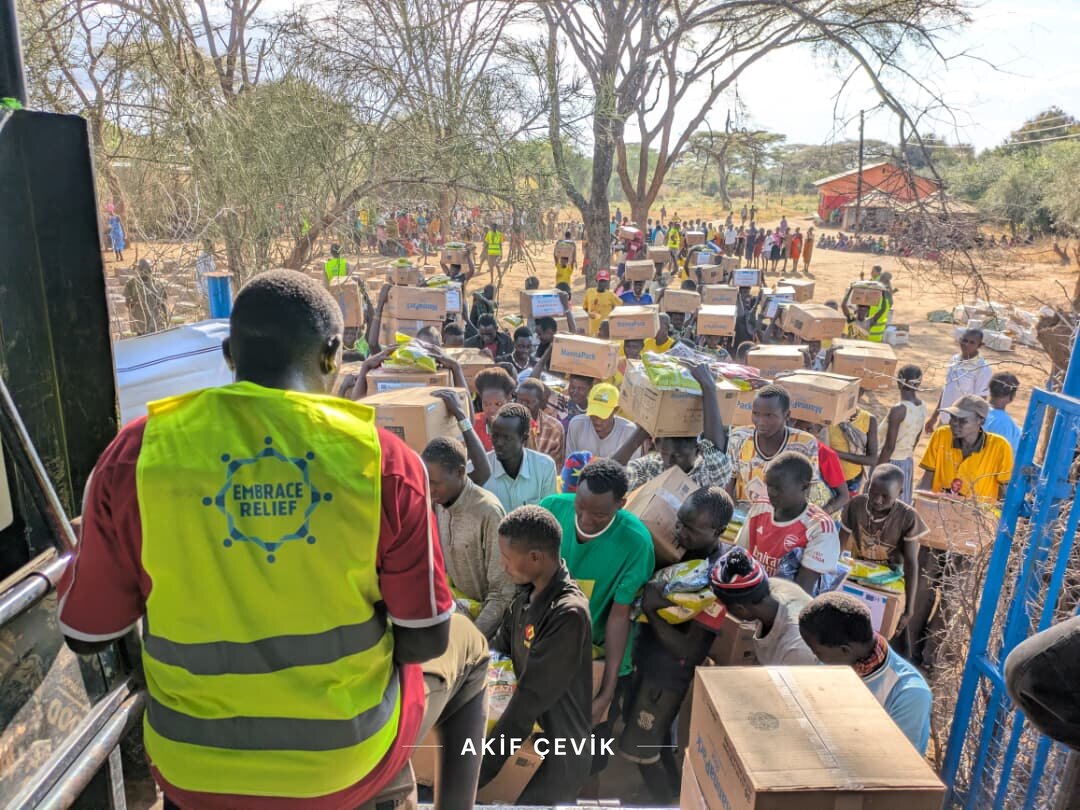
The humanitarian aid delivered to 1,240 families in the Moroto, Kaabong and Amudat settlements of Uganda’s Karamoja region between 12 and 15 September 2026 by the Nile Humanitarian Development Agency (NHDA), with the support of Embrace Relief, which carries out its work from the United States, showed that people living in different parts of the world can come together around a shared responsibility.
As the African understanding of Ubuntu puts it, “I am because we are.” That approach let us see the struggle against hunger not merely as food distribution, but as a responsibility to protect human dignity and to leave no one on their own.
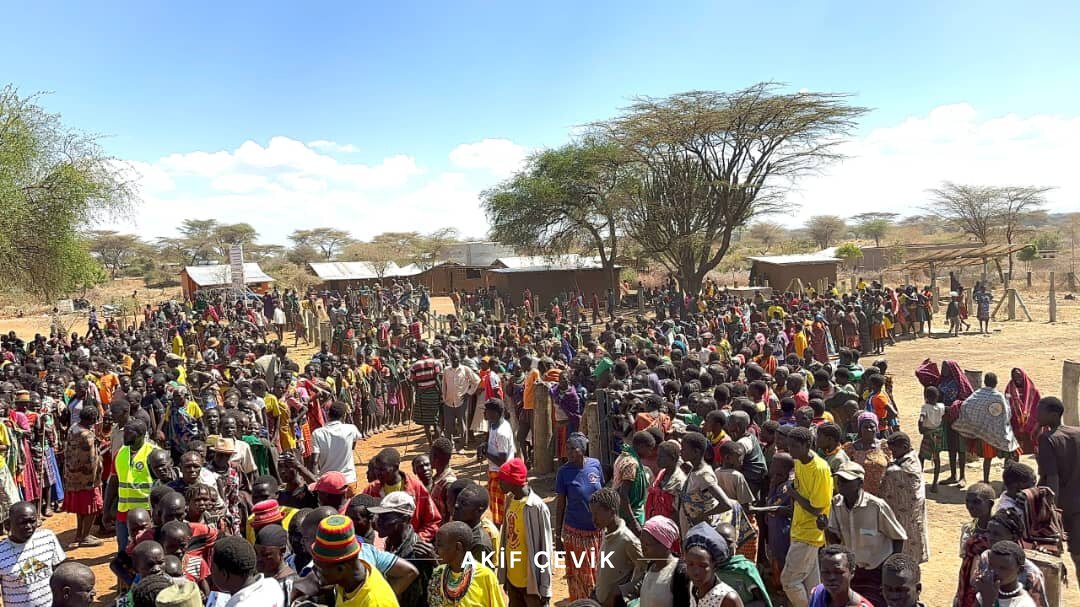
World Food Day: hunger, a concern shared by all of humanity
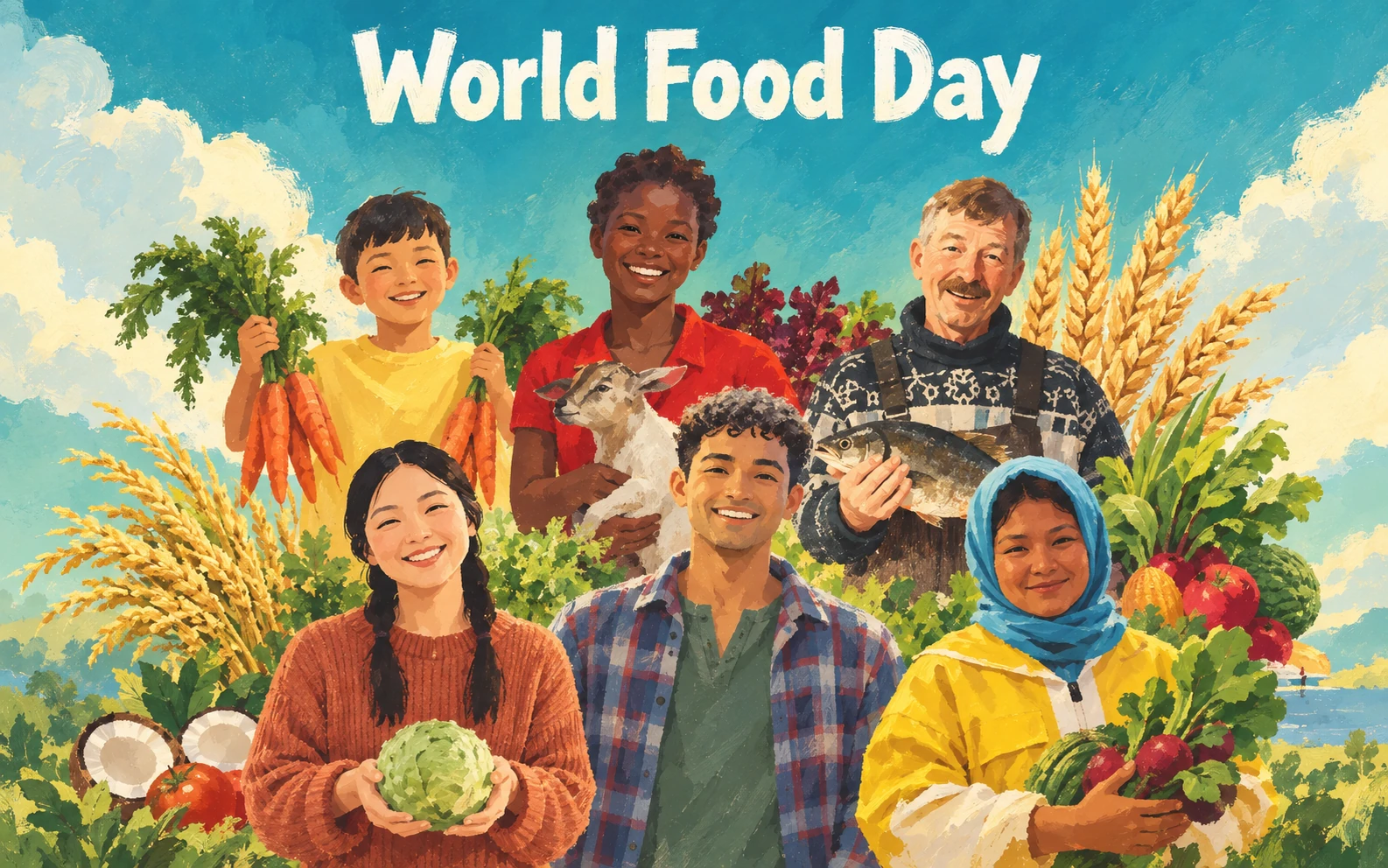
Every year on 16 October, World Food Day reminds us that access to food is not only a matter of economics or humanitarian aid; it is directly bound up with human rights, social justice and sustainable development.
Brought to the agenda under the leadership of the Food and Agriculture Organization of the United Nations (FAO), this day is a call to shared responsibility for a future in which everyone in the world can reach sufficient, safe and nutritious food. [1]
That tables grow more varied in one part of the world while families in another struggle to find their daily food is one of the fundamental contradictions humanity faces. Hunger cannot be explained by the absence of food alone. Drought, the effects of climate change, poverty, conflict, losses in production and inequalities in access to food shape people’s living conditions deeply. For this reason the struggle against hunger means not only getting food to those in need, but also strengthening the conditions that allow people to sustain their own lives.
Goal 2 - Zero Hunger, one of the United Nations Sustainable Development Goals, aims to end hunger, achieve food security, improve nutrition and promote sustainable agriculture. [2] This goal places responsibility on a wide range of actors, from states to international organisations, from civil society to local communities. Yet global goals take on their real meaning when they find a response in people’s daily lives.
The Karamoja region in north-eastern Uganda has long been contending with drought and with pressure on its sources of livelihood. Insufficient rainfall, damage to agricultural production and the harm pests do to crops make it harder still for families in the region to reach food.
According to information from the field, a period of more than nine months of inadequate rain, together with agricultural losses, has made it difficult for many households to meet their basic needs. In these conditions, vulnerable groups such as children, older people, families that include members with disabilities, and pregnant and breastfeeding women can be affected more severely by the consequences of food insecurity. In crises of this kind the question is not only what a family will eat that day. The development of undernourished children, the health of families, their access to education and work, even a community’s hope for the future, are all affected. What is happening in Karamoja shows once again why the global goals voiced on World Food Day matter.
Relief work that reached 1,240 families in Karamoja
According to the field report shared by the Nile Humanitarian Development Agency (NHDA), food and non-food aid was distributed in the Moroto, Kaabong and Amudat settlements of Uganda’s Karamoja region. In this work NHDA, the local implementing organisation, cooperated with Uganda’s Office of the Prime Minister (OPM), local authorities, community leaders and volunteers. [3]
The number of households reached was as follows: Moroto 500, Kaabong 370 and Amudat 370, making a total of 1,240 families who received a food package.
According to the agency’s report, 16.7 tonnes of fortified Manna Pack rice, 6 tonnes of sugar and 1,200 items of clothing were distributed. Each household representative is reported to have received 13.3 kg of rice, 4 kg of sugar and two sets of clothing. In setting priorities, the report states that attention was paid to households caring for older people, households that include people with disabilities, and households with pregnant or breastfeeding women and with children at risk of malnutrition. [3]
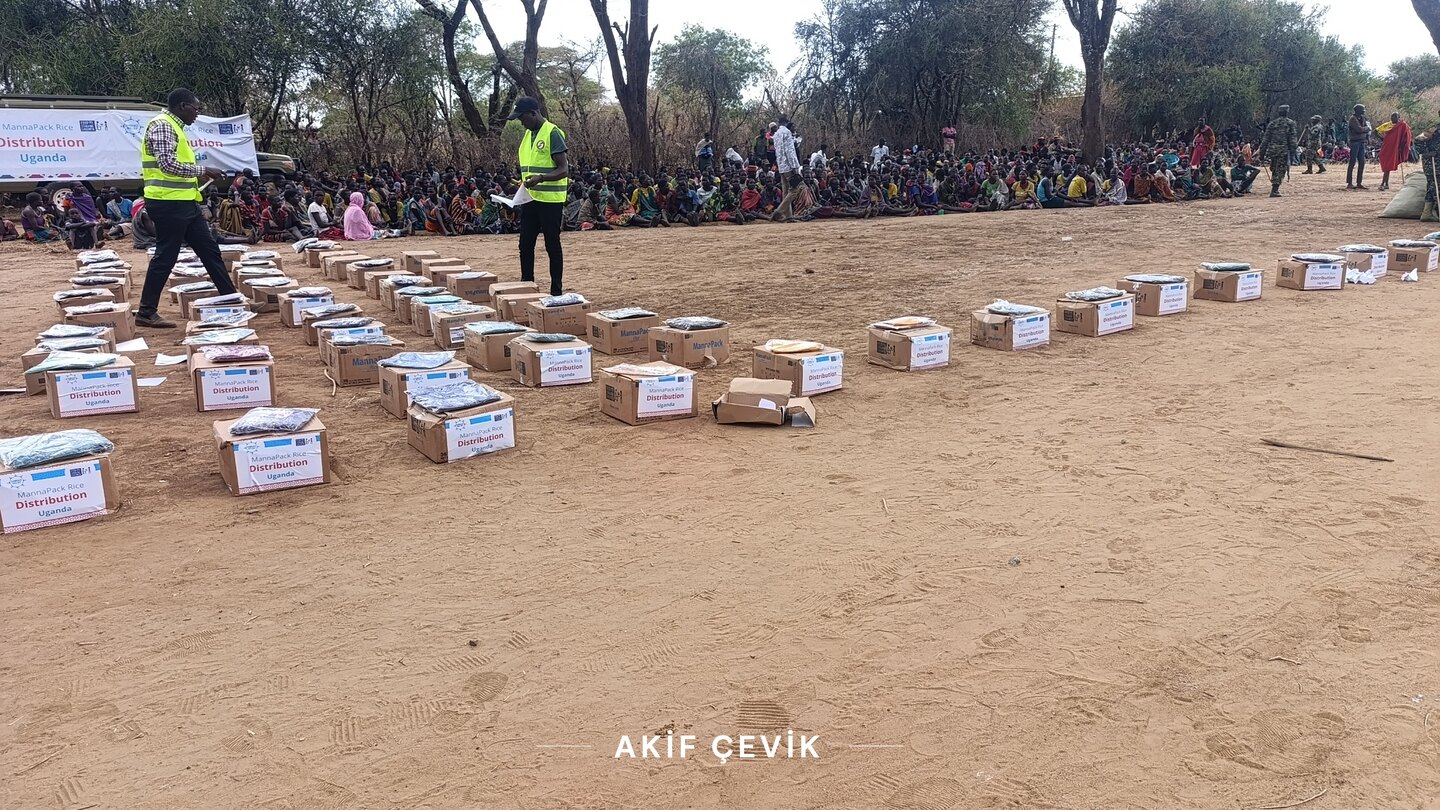
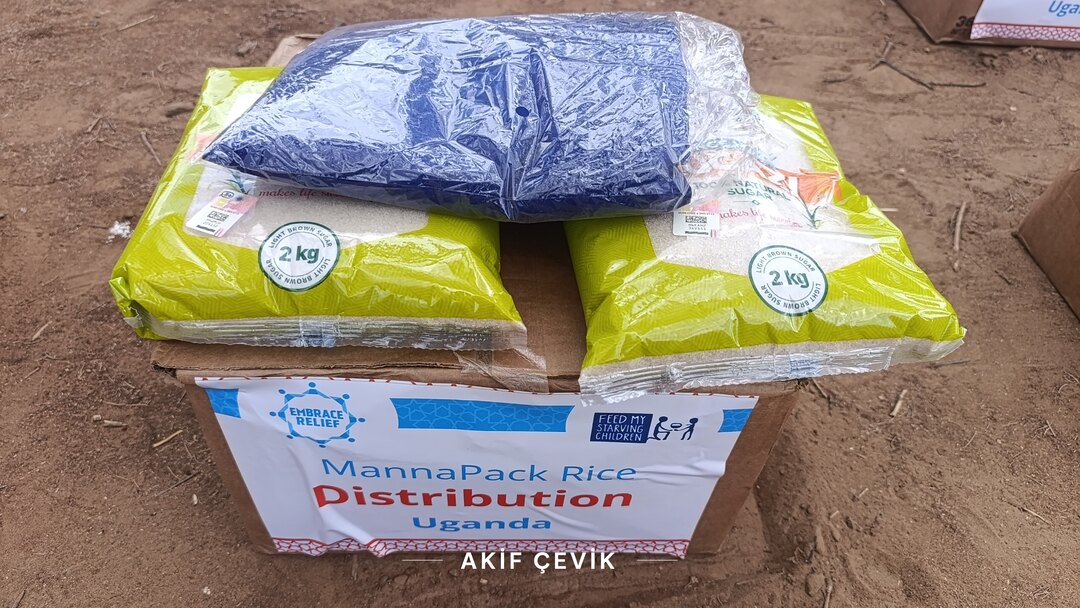
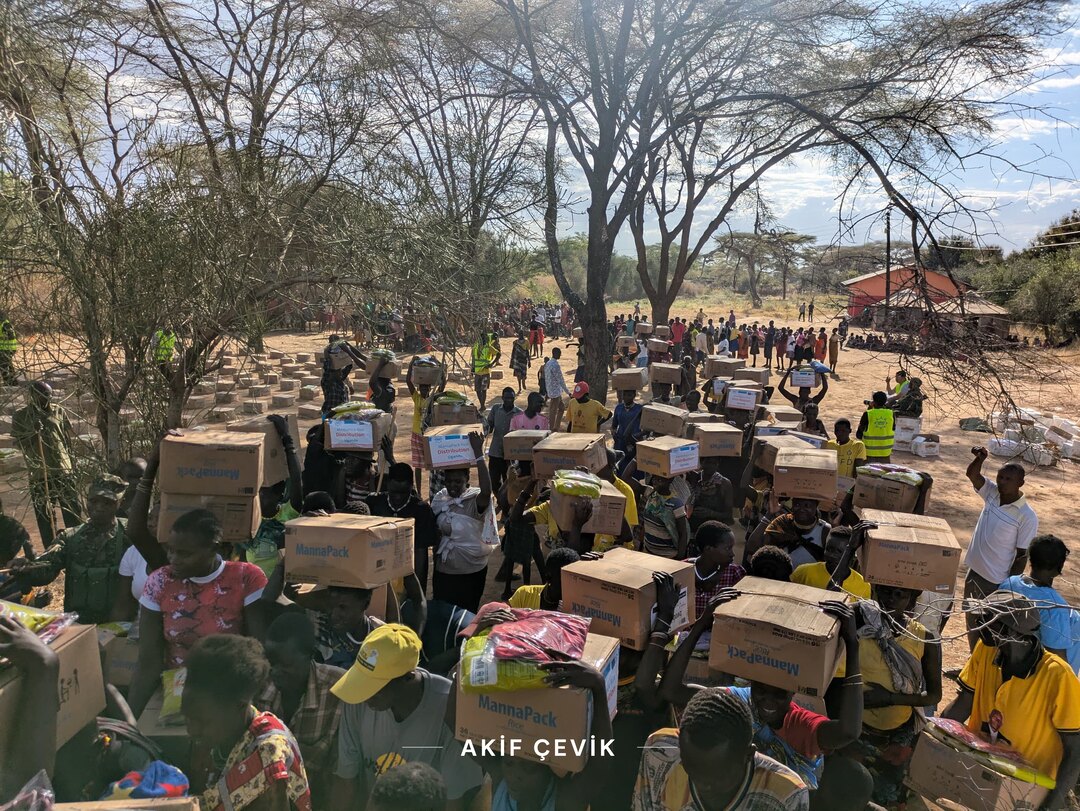
It would not be right to say that the aid distributed met every need in the region. What matters here is as much how the aid was organised as how much food was delivered. When international support, local knowledge, the coordination of public institutions and the work of volunteers come together, aid reaches those who need it more easily.
Ubuntu: “I Am Because We Are”
To make sense of this work in Karamoja we can look at Ubuntu, one of Africa’s deep-rooted traditions of thought.
Ubuntu, explained in various forms across different societies and languages, is an understanding that takes up a person’s identity and humanity within the relationships they build with others. In this approach a human being is not an individual who exists alone; they develop their humanity within relationships, mutual responsibilities and solidarity with others. [4][6]
Ubuntu is less a fine saying or a philosophical idea than the carrying of that idea into everyday life. Looking at the relief work in Karamoja from this angle, we can see several dimensions of Ubuntu.
First, one person seeing another. Families left in difficulty by drought and food shortage are not simply figures in a statistic. Behind every figure there is a family, a child’s future, a mother’s worry and people trying to keep their lives going.
Second, the sharing of responsibility. The support of Embrace Relief, the work on the ground, the coordination of public institutions and the contribution of volunteers show that different actors can meet around a common aim. Each of these actors has different means, yet they can act together in answering a basic human need.
Third, taking local communities seriously. Aid should not be limited to supplies sent from outside. The NHDA report notes that local leaders passed on information about preparing the Manna Pack products in the Karimojong language. This detail shows how important it is for aid to be offered with the community’s own language and local conditions in mind.
Fourth, the protection of human dignity. Describing those who receive aid only as people in need can overlook their will, their experience and their role in society. The Ubuntu understanding invites us to see a person not as an object dependent on the compassion of others, but as an equally valuable part of a shared life.
In this respect Ubuntu can be read as an idea that narrows the distance between the one who gives and the one who receives. A society with means today can answer the needs of another society. Tomorrow conditions may change; those offering support today may come to need support themselves. Solidarity rests on people recognising one another’s humanity.
In emergencies, food distribution is vital. When people are face to face with hunger, speaking of long-term solutions cannot take the place of meeting the need of the day. Food has to be put on the table first. Even so, sustainable humanitarian aid should not stop at answering the immediate need. Strengthening what makes continued access to food possible matters as well.
Three dimensions stand out in this framework:
- Emergency support: responding in time to the basic needs of families living with food insecurity.
- Local capacity: strengthening the ability of local organisations, communities and public institutions to identify needs, coordinate resources and respond to crises.
- Long-term resilience: working on solutions such as supporting agricultural production, improving access to water, securing adequate nutrition and diversifying sources of livelihood.
This is why the United Nations Zero Hunger goal addresses not only the distribution of food but food security, adequate nutrition and sustainable agriculture together. [2]
The role of civil society organisations is also worth noting here. Civil society does not have to take the place of public institutions or international bodies. It can build bridges between different actors, help make local needs visible and make it easier for people to meet around a shared responsibility. Of course the impact of any relief work is not measured by the number of people reached alone. How well the aid fits the need, how fairly it is distributed, how far local communities take part in the process and whether the support continues all have to be weighed.
From global goals to local solidarity; World Food Day is an opportunity to think again about the relationship between goals set worldwide and work carried out locally. The United Nations Zero Hunger goal offers a global framework. But reaching that goal depends on understanding the needs of local communities and on different institutions working together.
In the Karamoja example, international support, local implementing capacity in Uganda and coordination with public institutions came together. This cooperation shows that global solidarity produces concrete results only when it meets local needs.
Making work of this kind visible to the public also matters. Hunger and poverty often come onto the agenda only at moments of crisis; yet the struggle against them calls for sustained attention and responsibility. Drawing people’s attention to needs in distant places, increasing the sharing of knowledge between different societies and strengthening a culture of solidarity are a complementary part of humanitarian work.
This is where the meaning of World Food Day becomes clear. Global goals should not remain phrases voiced at international meetings; they should turn into work that has a counterpart in the lives of local communities.
On World Food Day we can ask ourselves this question: how far from our own lives is the hunger of people living in another part of the world?
Perhaps the answer has to do with how we define humanity.
If we see humanity as limited to our own family, our own circle or our own country, the suffering experienced elsewhere in the world can stay distant from us. But if we think of humanity as a shared field of responsibility, needs in other parts of the world become a matter for our conscience as well.
It is precisely here that Ubuntu’s words, “I am because we are”, take on meaning. To value another’s life is to protect the value of a shared life. To be sensitive to another’s hunger is to protect our own humanity. Because the struggle against hunger is not only filling someone else’s stomach; it also feeds our will to live together, our shared conscience and the meaning of being human.
References
- FAO - World Food Day. Information on the purpose of World Food Day and on global food security work. https://www.fao.org/world-food-day/en/
- United Nations - Sustainable Development Goal 2: Zero Hunger. Targets for ending hunger, achieving food security, improving nutrition and promoting sustainable agriculture. https://sdgs.un.org/goals/goal2
- Nile Humanitarian Development Agency (NHDA). Field report on the humanitarian aid distribution carried out in the Karamoja region between 12 and 15 September 2026. This source is based on the report as shared.
- UNESCO - “I Am Because You Are.” On the Ubuntu idea and the human being’s relationship with others. https://www.unesco.org/en/articles/i-am-because-you-are-0
- RELX SDG Resource Centre - World Food Day. Events and resources connected with World Food Day and the sustainable development goals. https://sdgresources.relx.com/events/world-food-day
- Metz, Thaddeus. “In Defence of Ubuntu.” Studies in Philosophy and Education 30 (2011): 321-341. An academic study on the ethical and philosophical foundations of Ubuntu. https://doi.org/10.1007/s11217-011-9267-2
Reader notes
No one has left a note on this post yet. Be the first.
Related posts
 Social Responsibility
 Social Responsibility